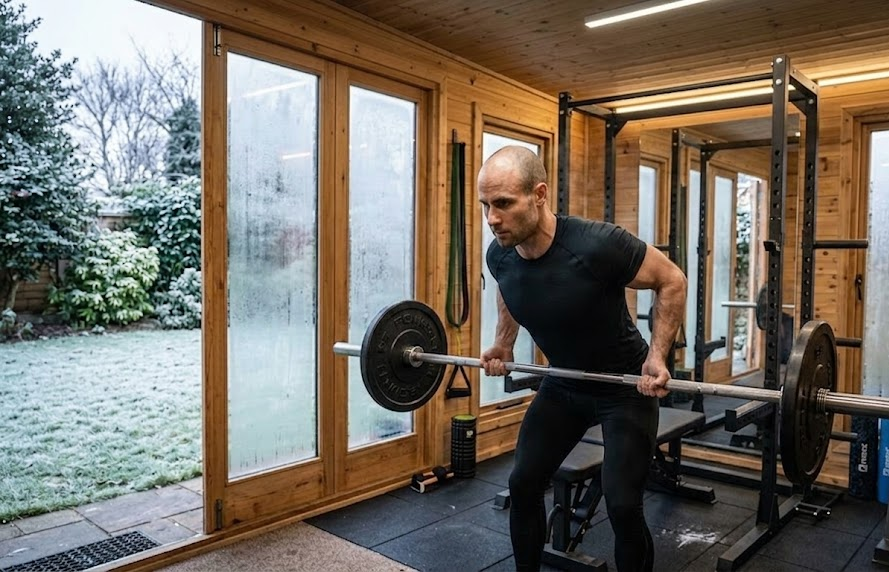
Step into a garden gym in January, and it feels like stepping into a freezer. Frost covers the windows, your breath clouds in the chilly air, and frozen metal equipment stings your skin. It is no wonder many individuals abandon their workouts before spring arrives.
According to JLL Fitness, 42% of UK adults are afraid to exercise in front of others. This drives many men to build private home gyms, allowing them to exercise privately and stick to their workout routines more consistently.
However, building a garden gym that survives a harsh British winter requires more than bolting a weight rack to a shed floor. Success requires actively combating dampness, freezing temperatures, and structural stress from heavy equipment.
At 3 Men in a Bunker, we offer holistic health solutions for men in Leeds, which is aimed at enhancing well-being, motivation, and joy.
Practical Steps to Build a Garden Gym During Winter
Here are some practical steps to build a garden gym during winter:
Step 1: Reinforce the Subfloor Before Anything Else
A standard summer shed floor will bend or snap if a loaded barbell is dropped onto it from shoulder height. Before adding anything else, the shed floor needs to be properly strengthened with sturdy wooden beams capable of supporting heavy loads in one spot. This will prevent the floor from bending during deadlifts and from sagging over time.
Step 2: Fit Rubber Matting for Impact
To keep your floors and equipment in top condition, invest in rubber mats that are at least 20mm thick. Thinner mats crack and wear out immediately under heavy use. In contrast, sturdier, thicker options provide adequate structural protection and help ensure a safer training environment. For a visual guide, see this resource that explains how to install high-density rubber gym flooring in a garden room.
Step 3: Stop Damp Before It Starts
Creating a home gym can be tough, especially when it comes to dealing with moisture. When temperatures drop at night, metal equipment like weight plates and barbells can get wet from condensation. This moisture can cause rust, which is not good for your workout gear. It’s vital to keep your gym equipment dry to maintain a safe and effective place for exercising.
Plugging in a high-powered heater is a waste of energy if the heat escapes immediately through thin walls and uninsulated floors. To stop damp from ruining your equipment and keep the space usable when temperatures drop, you must ensure the structural shell has proper insulation for garden rooms built directly into the frame.
Step 4: Choose Heating That Works Efficiently
Infrared heaters work by warming people and objects directly rather than heating the surrounding air. This makes them a great option for quick warming up. When you walk into the room, you can turn on the heater and feel the warmth almost instantly, without waiting for the entire space to heat up. Eventually, you can switch to a regular heating system.
Step 5: Follow a Winter Maintenance Checklist
Even in the coldest months, a brief weekly routine can help you keep your home gym in excellent shape. A recent exercise.com report found that 67% of UK individuals with gym memberships do not actually use them. This shows that sticking to a routine at home is more important than paying for a gym membership.
Use this four-point checklist:
- Check that windows and doors are sealed well to stop drafts and moisture.
- After each workout, wipe down steel bars with a thin layer of 3-in-1 oil.
- Look at the floor joints for any shifting or gaps caused by temperature changes.
- Before it gets cold, test your heater’s thermostat and timer.
Step 6: Watch How Cold Affects Your Kit
Cold weather can harm some exercise equipment more than others. Rubber resistance bands can lose their stretch and break easily when it’s cold (below 5 degrees). The screens on treadmills and rowers may respond slowly or not work properly if moisture gets inside them. Metal weights and bars are less likely to break in the cold; they might get some surface rust, but they are the most durable in a cold room.
Conclusion
Investing the effort to build a winter-proof garden gym pays off. If the floors are solid, the walls are sealed, and the heating is reliable, you can train comfortably year-round. Once you secure the structure and protect your equipment, maintaining a consistent workout routine becomes easy. For personalised support and fitness guidance, contact us at 3 Men in a Bunker now.